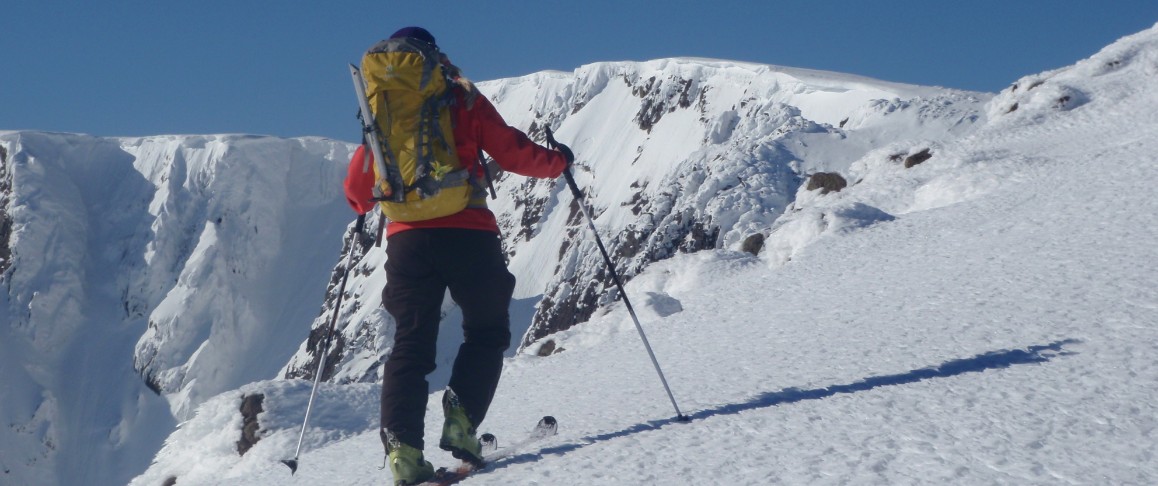
Top tips for when you're heading out on your skis or board
- Make sure your rucksack has ski attachments.
- Before leaving double check your kit list - skins, transceiver, probe, shovel, ice axe, ski crampons, head torch, navigational aids including map & compass, gloves, hat, spare gloves & extra clothing, food, drink goggles, sunglasses, sun cream, camera, Velcro ski strap, spare batteries and basic first aid kit.
- Use the "Be Avalanche Aware" process to consider all aspects of your plan before you leave the house, while you’re on your journey and at key places along the way.
- Check the latest SAIS avalanche hazard reports and relate this to the terrain you plan to visit. To ski the best snow you might need to stay on lower angled terrain.
- Consider the skills, fitness and experience of everyone in the group and plan your route accordingly.
- Practice using your transceiver and consider taking a companion rescue or winter skills for backcountry skiers course.
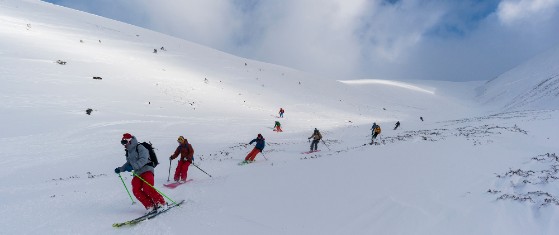
Photo by Ed Smith
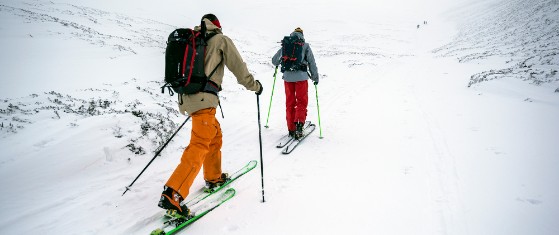
Photo by Ed Smith
- When the snow level is high, consider approaching in other footwear carrying the ski boots attached to the skis on your rucksack.
- Winter days are short so aim to set off early and make the most of the daylight hours.
- Check in on the skills, fitness and energy levels of everyone in the group throughout the day and be ready to change your route if anyone is having difficulty.
- Remember considerable distance can quickly be covered on ski and visibility can change quickly, so having navigation aids and knowing how to use them are vital.
- Keep everyone in the party in view especially in bad weather.
- Always check the weather and avalanche forecasts (SAIS), be alert for evidence of recent avalanche activity and wherever possible avoid similar slopes.
- Regularly clear the ski bindings of any build-up of snow or ice.
- Always let somebody know your route plans – and remember to let them know you’re back safely!
- Carry a fully charged mobile phone but keep it switched off and in a pocket close to your body (but at least 30cm away from your transceiver!) so it’s ready to use if needed in an emergency.
- Follow the Snowsports Touring Code if you're skiing near managed ski areas, and use designated access routes to move through them safely.
- If you get into trouble and need help, find a safe place and call 999 and ask for Police then Mountain Rescue and stay put until rescuers locate you. While you’re waiting, layer up, get into your group shelter or dig a snow hole to keep you out of the wind and have something to eat or drink to keep energy levels up.